I can remember the exact day that I changed my mind. I’d seen many of them in people’s yards; one of my neighbors had a few. And I hated them. I think part of the problem was that the rest of the yard was weedy and unkempt, and so they looked like weeds too. (and in fact now I’ve learned that many of them are).

The day that I changed my mind was April 3rd, 2009. We had made a trip down to Eugene, OR, for my husband’s birthday. No particular reason it was just a place to go, we’re still exploring this adopted state of ours. As I’ve mentioned before, bookstores are my husband’s weakness, college bookstores are even better. So we were exploring the U of O bookstore and I started thumbing through this book
John Brooks Garden Masterclass and there they were on the cover! And they looked amazing! Inside there were more, just look at their fabulous candelabra bloom spikes!


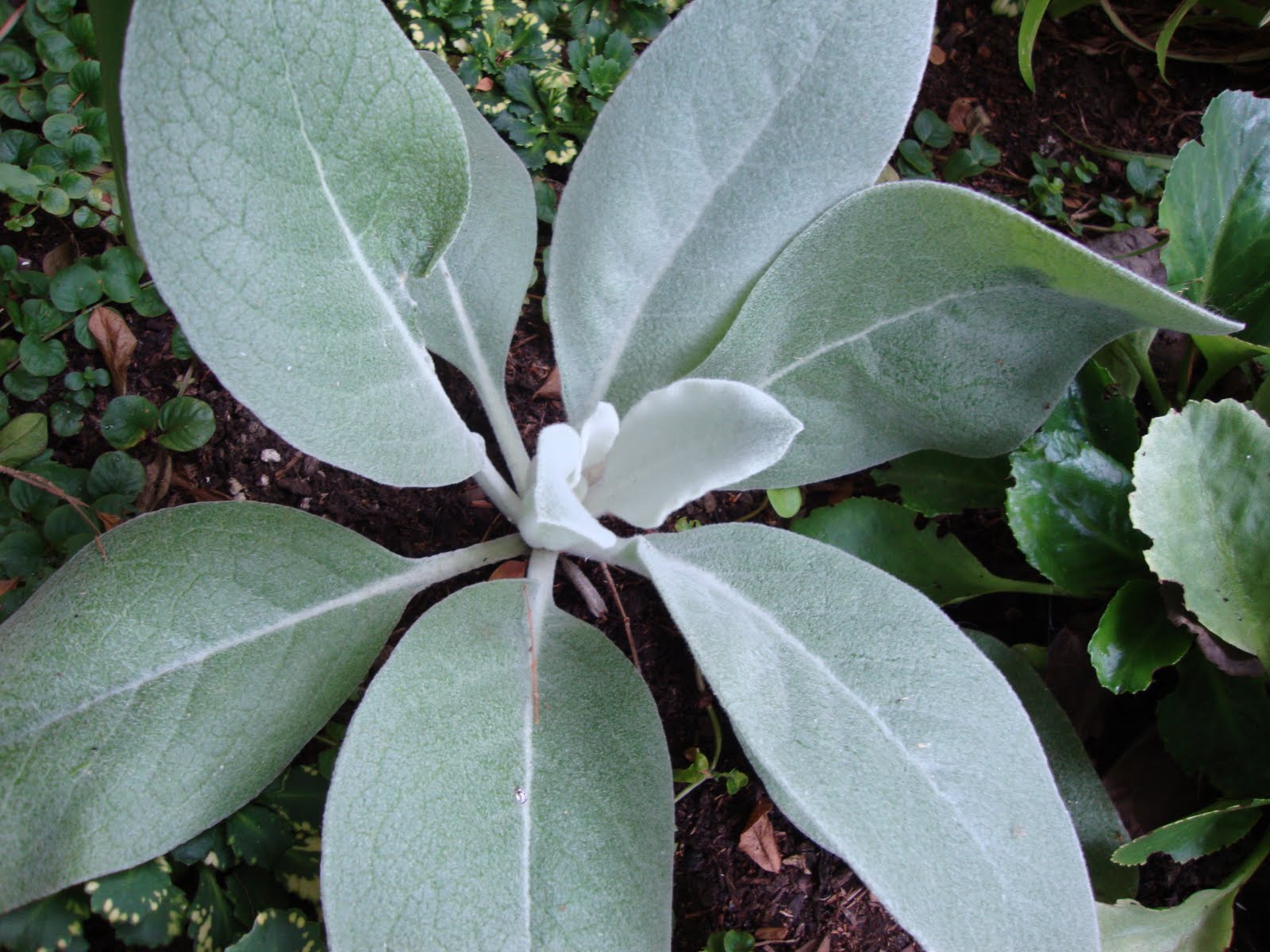
I was hooked. I think it was seeing them in a ‘designed’ garden setting that allowed me to finally recognize their unique beauty. I immediately bought a couple of Verbascum bombyciferum 'Arctic Summer' and planted them; they are anything but inspiring when still small plants but within a growing season become amazing. Here is a recently planted seedling.

And one about 3 months old.

A few months later I discovered the affectionately titled Arizona Garden right here in Portland. And I knew I was on the right path when I saw theirs. Big sexy woolly leaves!

Now I notice their dramatic bloom spikes everywhere…on a walk to dinner with a friend…

In the Arizona garden….


And on our trip to Central Oregon…


Although these are the weedy variety, Verbascum Thapsus L., or Common mullein. Seedlings…


From the book
Weeds of the West…”this weed was introduced from Europe, but it is a native of Asia and is common throughout the temperate parts of North America. It is a common sight along river bottoms, in pastures, meadows, fence rows and waste areas, especially on gravelly soils. Because of the large number of seeds produced by each plant, it is difficult to control. Livestock will not eat the plant because of its woolliness. Flowering and seed production occur from June to August.”

Weeds or not, I now see them all as beautiful. I even love the dried stalks they leave behind when the plant dies.

My wilted, and now officially dead, plant still has a beauty to it. How many plants do you know that die so beautifully?

Next summer I should be enjoying squiggly blooms from these two…I can’t wait!

And I’ve got six new seedlings planted ready to go crazy next year, or the year after. So I’m curious…are there any plants you once hated that now you can’t live without? Can you remember the moment you changed your mind?

 It’s no secret that I love summer. I eagerly anticipate its arrival and I squeeze every last drop from it before I’ll admit it’s gone.
 I don’t like what I’ve been hearing. Sure, some people have been using the “F” word for weeks now, but I can chalk that up to the fact they’re part of the back to school crowd, or worse, one of those “summer haters” (you know who you are). But the last few days the weather forecasters have been using scary language…“early Fall”… “abnormally cool”… “return to the rains”…an extended weather that forecast reads like the screenplay to a bad horror film.


 Since last Friday was predicted to be sunny and 88 degrees I did the logical thing and cleared my schedule; the only thing that I absolutely had to do was enjoy the sun. And I did. And so did the garden.
 I did make a quick stop at the market. The cashier asked if I had any plans for the afternoon. I said “enjoy the warm sun while it’s still here”…his response? “It’s time for you to go back to California”…funny…I’m not from California.


 I couldn’t take a picture of myself relaxed in this lounge chair, but that’s where I was for a good part of the afternoon. I was remembering a sunny warm Labor Day several years ago (maybe 7?), after mowing the lawn I sat down in this same lounge chair and fell asleep in the warm sun. Something told me it was the last time I would feel the warmth of the sun that summer. And it was. I’m praying this year it is not.

 When we bought our home and I started working on the garden there were only two plants my husband requested not be included in the plantings: a lilac bush and pampas grass. Everything else was fair game. Sounds reasonable right? Well…growing up in a zone 5 climate pampas grass was something you thought of as exotic. Something you saw when you were on vacations, something “they” (whoever they are) could grow but you could not. Here was my chance; I could finally be one of “them.” I ached to be one of them. Except the man I loved was asking me not too.
 I do love the curls though.
 Since the evening light was lovely and I was already there taking pictures of the Verbascum blooms I snapped a few more pictures around the Arizona garden. For those of you just tuning in…this garden is right here in Portland, but when I first saw it I couldn’t believe my eyes and dubbed it the ‘Arizona garden’. I took an invited tour last May, pictures are




 …with a caption that read: “…this one we refer to as the project strip. I had huge hopes for this when it started, 3 or 4 years ago. Then nothing. Dunno.”


