Wednesday, April 12, 2023

My Hortlandia report

Last week I attended the HPSO's annual spring plant sale—Hortlandia—with my friend Nat. Since we were in the neighborhood (way the heck and gone west of town) we decided to stop at Blooming Junction, to see what agaves they had on offer. Unfortunately there wasn't anything to get excited about. As I feared, large agaves are going to be very difficult (if not downright impossible) to find in Portland this year.

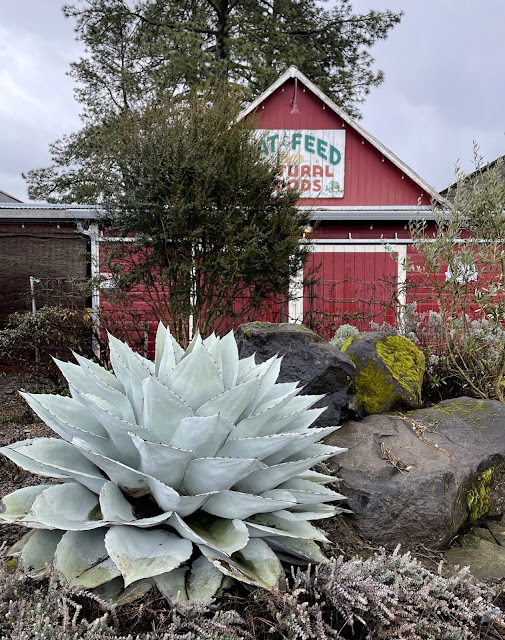
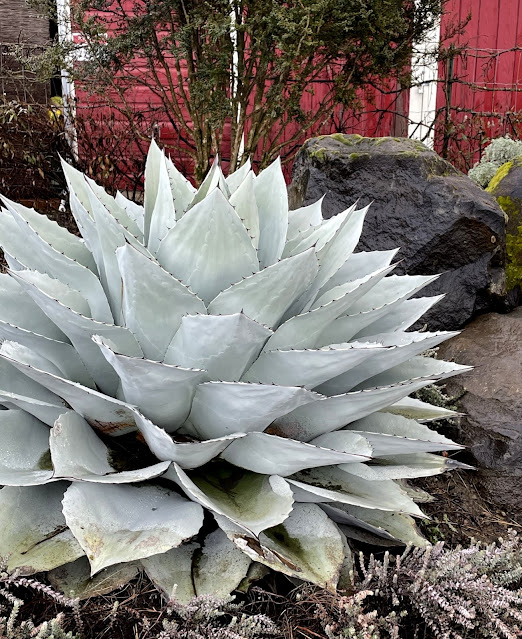
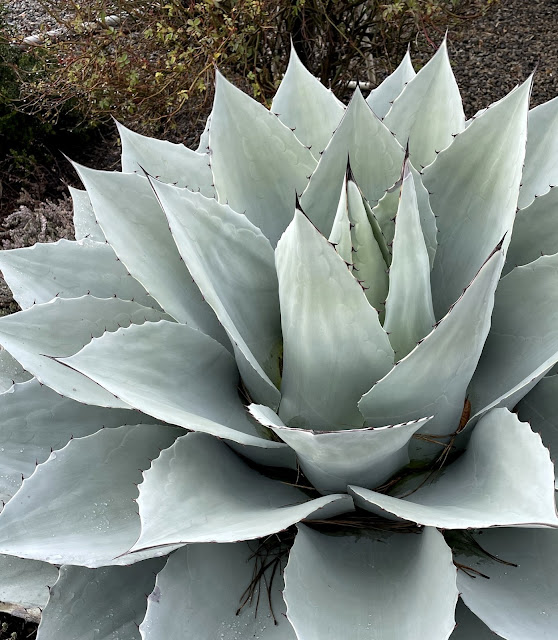
However, since we were there, we hiked up the berm to check out their Agave ovatifolia patch. It did not disappoint...
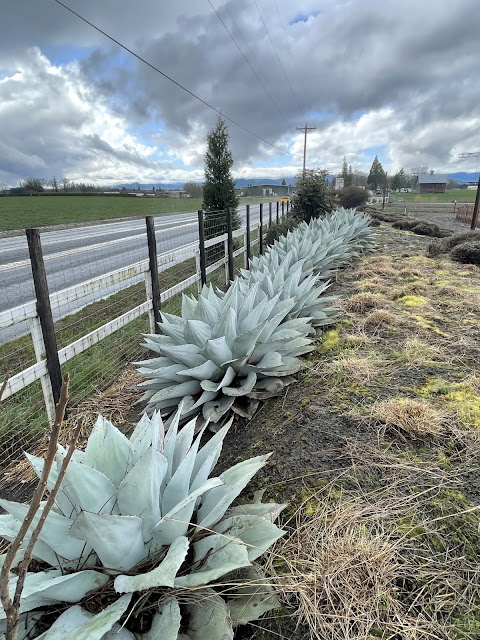
I have been watching them for years now. Back in the spring of 2017 I filed a report on these, and the other agaves at Blooming Junction, including several that had succumbed to the evils of that bad winter—read that post here.
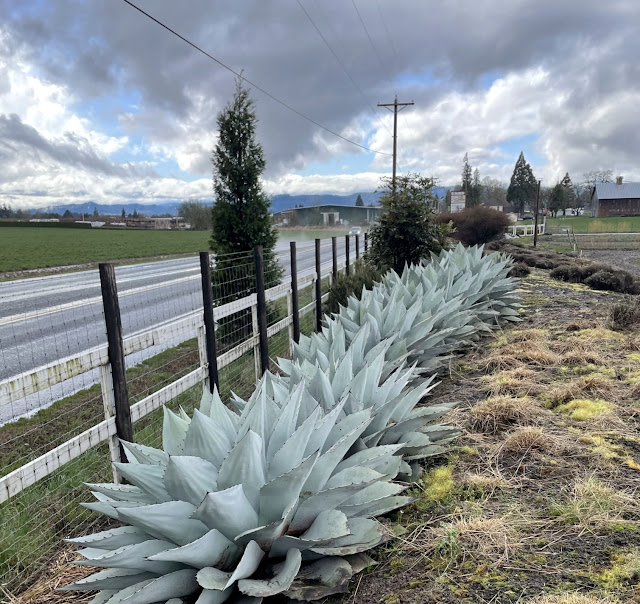
The only bad bit I saw this time was on this plant at the end.
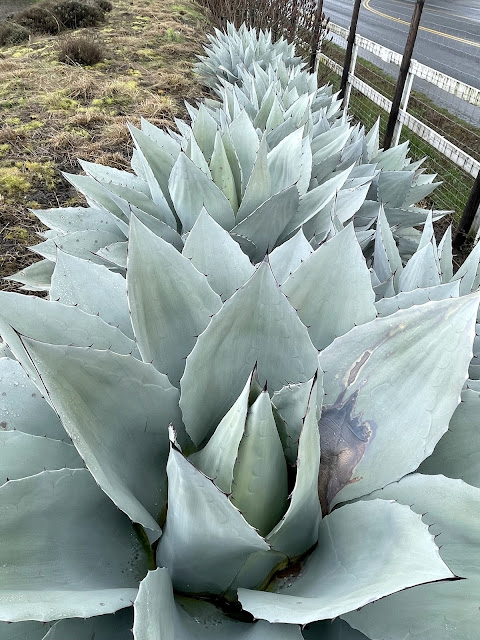
This was the only non-ovatifolia in the area, think it's an Agave havardiana.
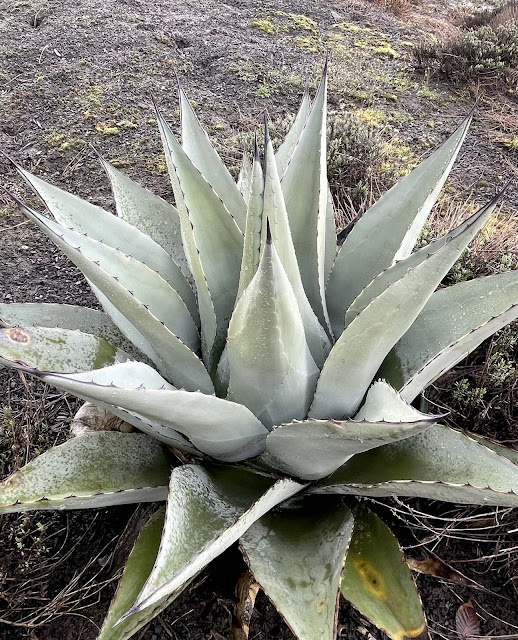
Back down in the display garden in front of the nursery entrance...
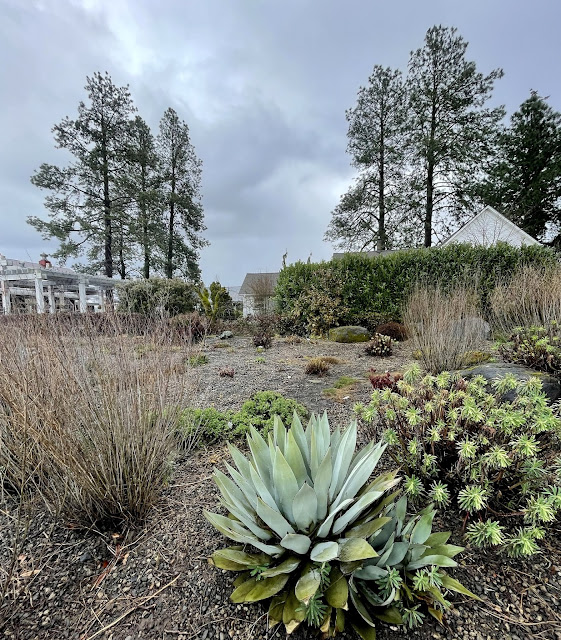
Maybe an Agave parryi var. parryi?
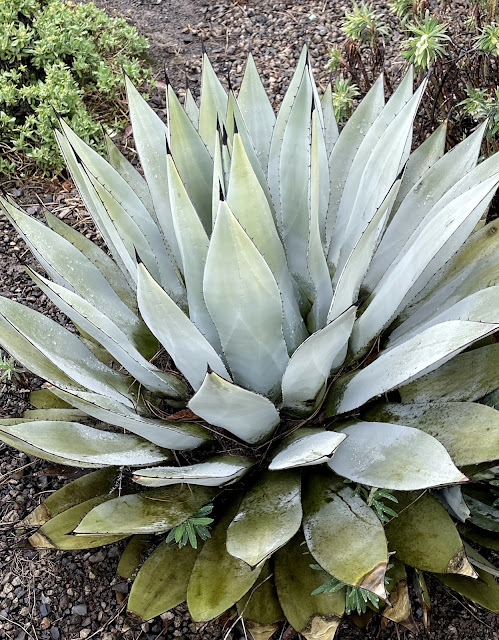
Agave bracteosa
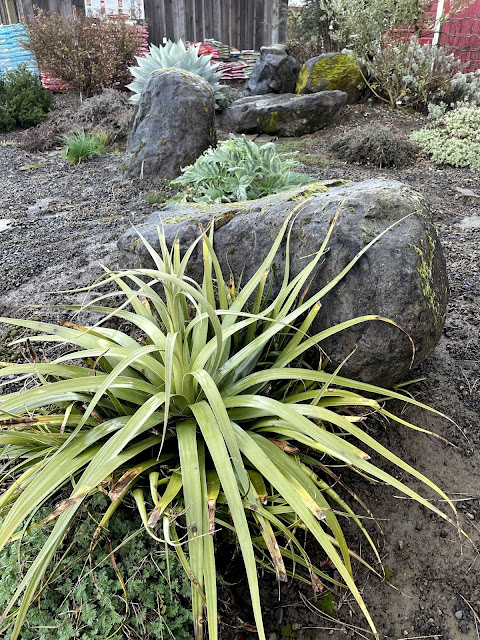
And a tall Agave ovatifolia...
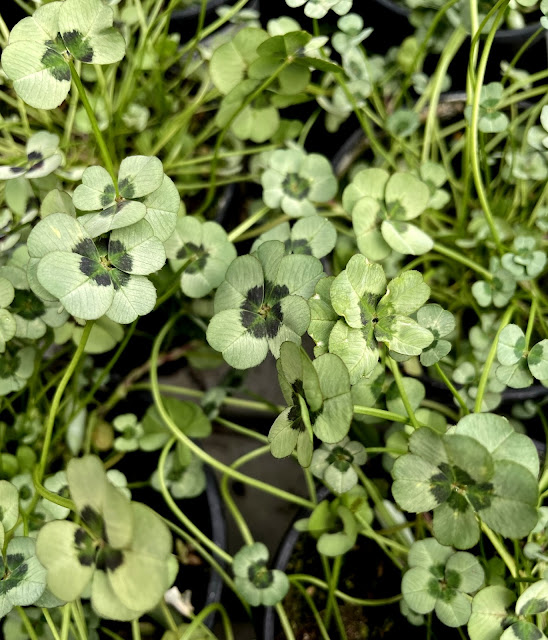
Inside the nursery I was kind of amused by these patterned trifolium which had me thinking of oxalis, the only weed I can't seem to purge from my garden.
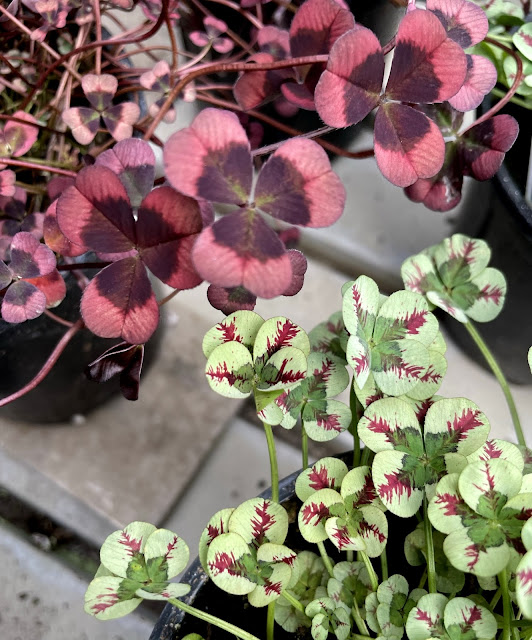
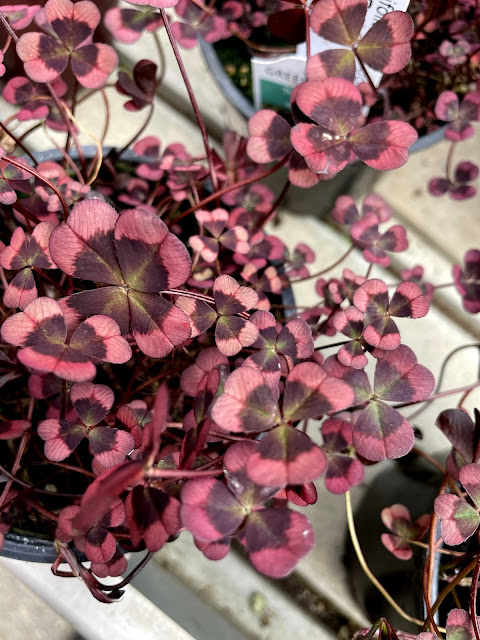
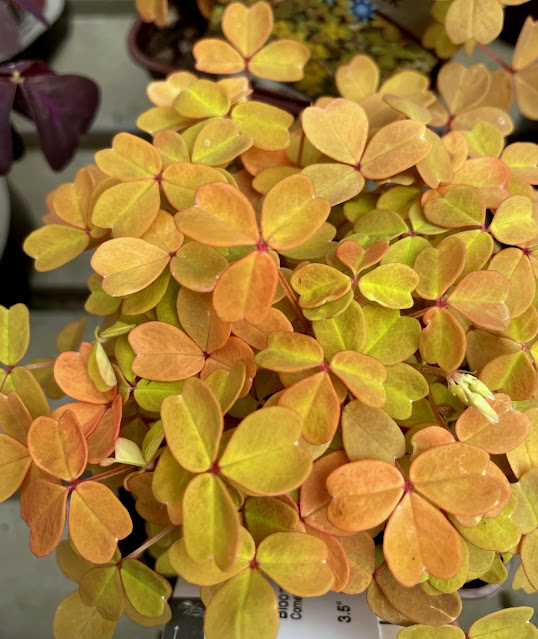
Now we're really talking oxalis, this one Oxalis spiralis vulcanicola 'Sunset Velvet'.
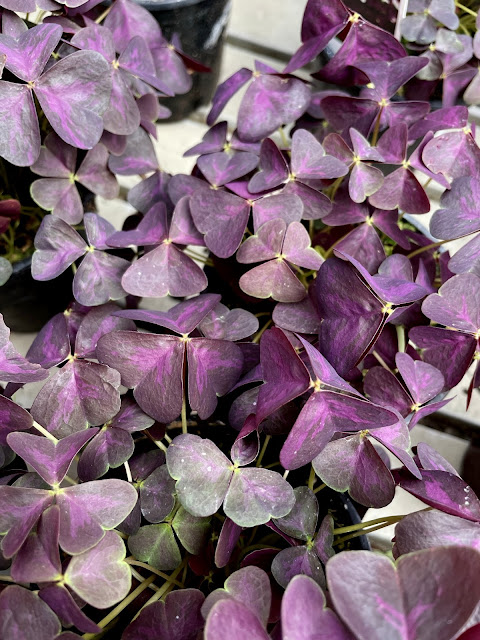
Oxalis triangularis 'Charmed Wine'
I did buy a couple of plants at Blooming Junction, but didn't take a separate photo, I'll cover my purchases at the end of the post. 

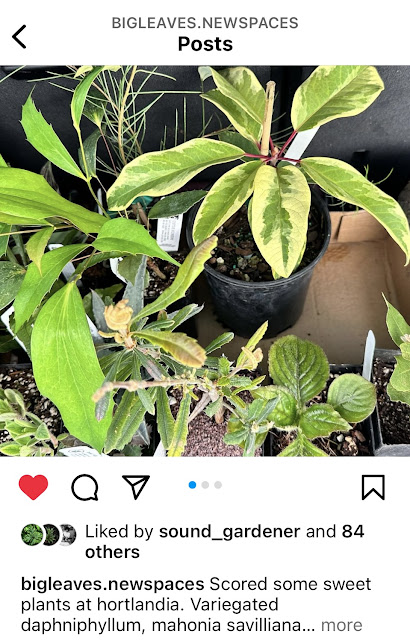
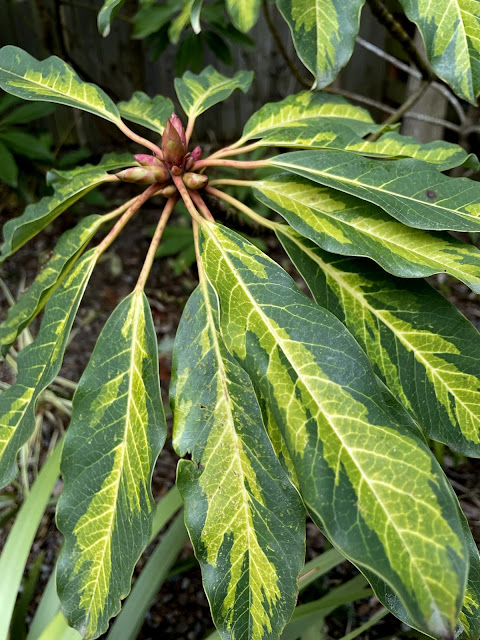
Now we are at Hortlandia; where I ran into my friend Tim Batog proudly toting his major Hortlandia score, a variegated daphniphyllum...
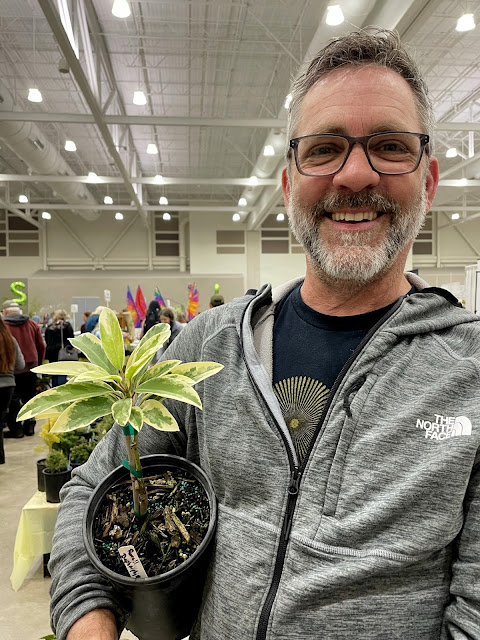
As much as this plant cost (and it wasn't cheap), I think he could have turned around and sold it for a tidy profit without even leaving the building. Ditto for another friend, William Wong, who scored the other one (that's his Instagram image below). Well done guys!
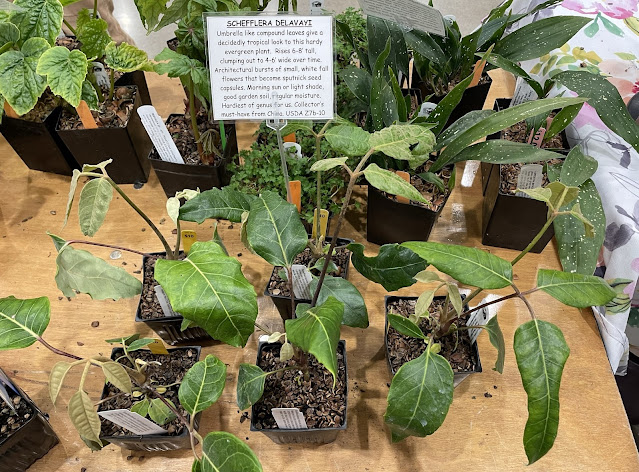
This was fun. At the Secret Garden Growers booth I got to meet my Schefflera delavayi's kids.
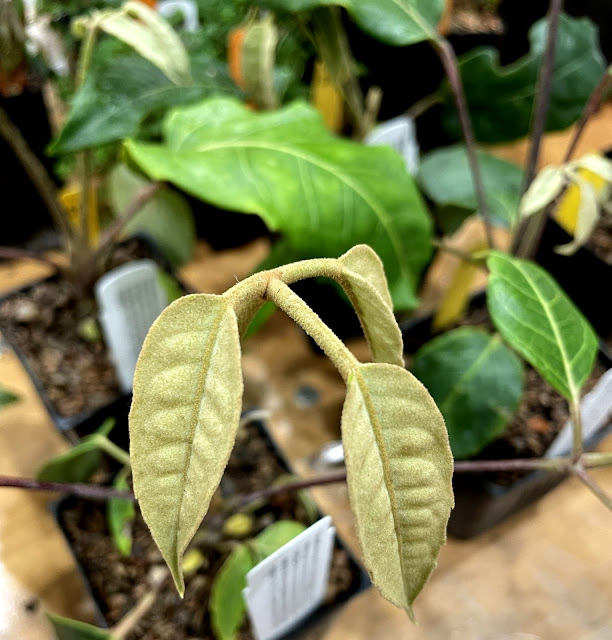
A couple years back my plant produced seed and my friend Ann grew them on and now they're plants for sale! This made me really happy to see...
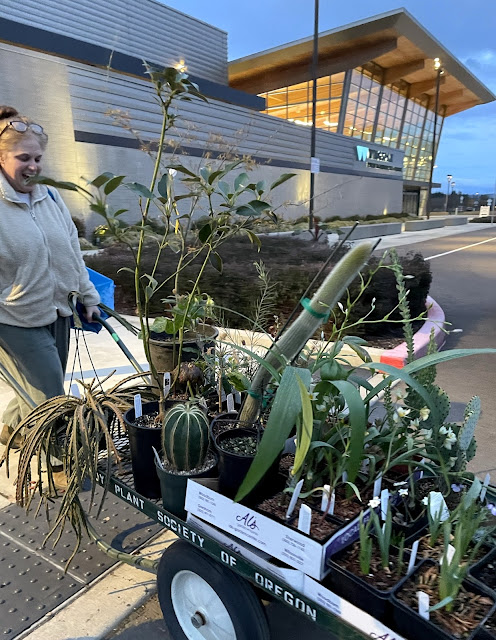
As did this! Another Instagram friend's major haul being wheeled out to her car. Go Kim!
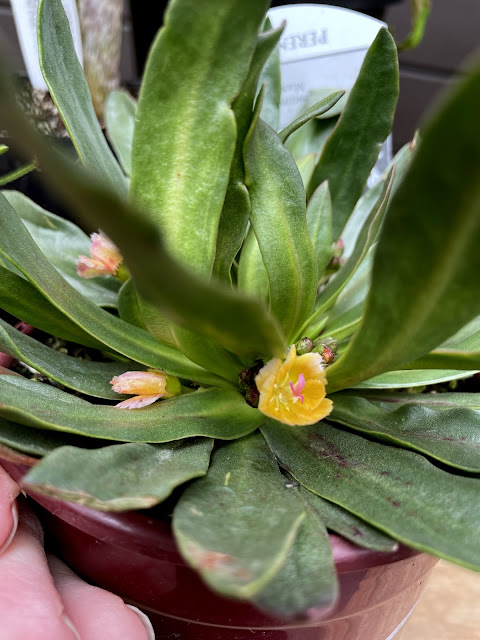
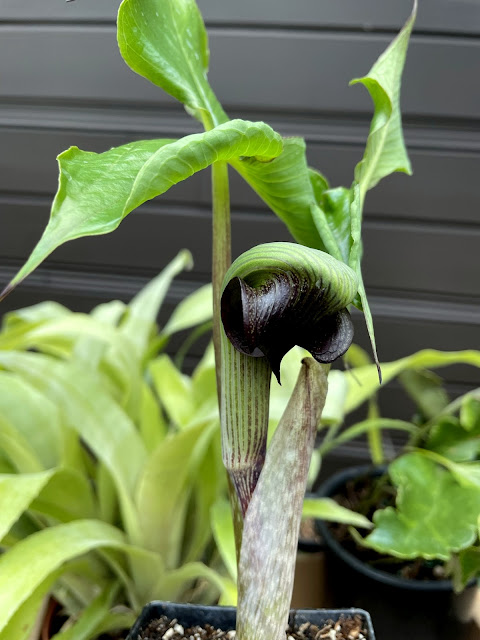
My haul is much more modest, what can I say. From left to right: Billbergia nutans, Cassiope lycopodioides, Arisaema ringens, Pyrrosia lingua 'Variegata', Lewisia longipetala 'Little Mango'.

I've got several peachy blooming lewisia but decided it was time to expand into the yellows.
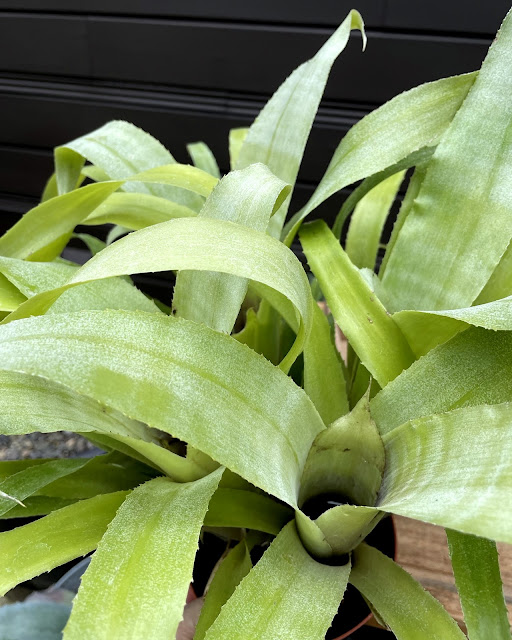
I've also got a few light green Billbergia nutans, but this pot was full of big fat pitchers and I've got plans for them...
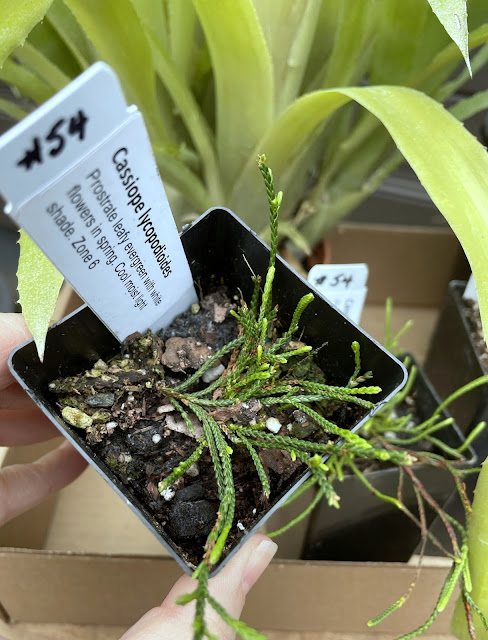
Cassiope lycopodioides, I am amazingly consistent in my desires, even when I don't realize it...
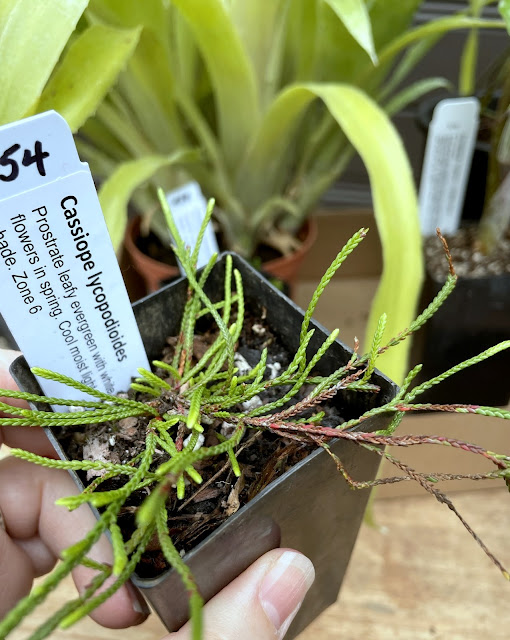
Back in February when Ann and I visited the Rhododendron Species Botanical Garden, I lusted after a plant mislabeled as Calluna 'Askival' but was actually Cassiope 'Askival'—identified as such by FB plant friend James Andrew Gould. 

I spotted these cassiope and quickly grabbed a couple, not remembering my previous cassiope lust. It wasn't until I bumped into that same friend at the sale that the connection was made. 

Of course the more I read, the more I'm worried about keeping them alive. From Heaths and Heathers Nursery: "A choice and rare alpine plant.  Needs protection from the hot afternoon sun.  A key to success is keeping the roots cool in the afternoon.  They need good drainage as well.  Northwest mountain native." We'll see what I can do.
I gabbed an Arisaema ringens because of my ongoing desire to have an odd number of this plant in my garden. Two have established themselves, the third is proving elusive. Wish me luck.
Pyrrosia lingua 'Variegata', because, well. It's HOT! And you can never have enough pyrrosia—even after what this winter did to my collection (because of what this winter did?).

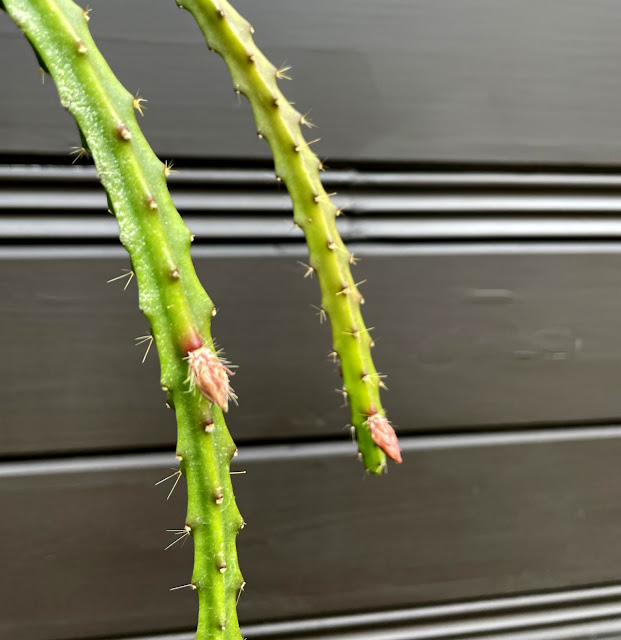
Finally one that didn't make it in the initial haul shot, Aporophyllum 'Shirley'...
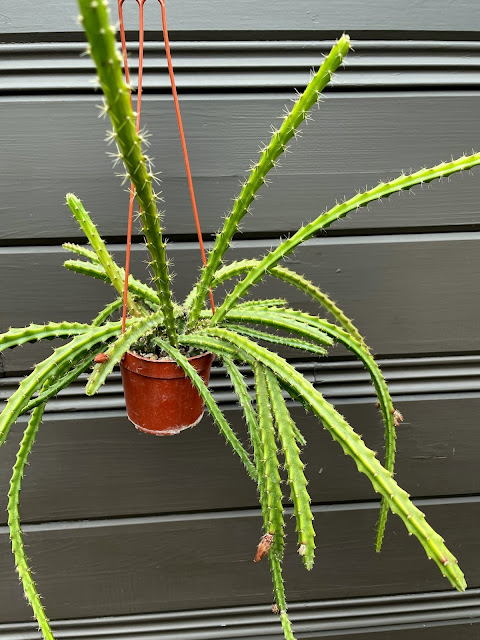
This is my second 'Shirley', she's a blooming fool and I love her for it, thus I was happy to add another.
So what's "the one that got away" for me? Not the variegated daphniphyllum, because I really like my plant, with the green on green variegation better...
Nope, it's this! Mahonia fremontii...

I lusted after it when I saw it in Texas, and my friends Heather and William both scored one—I'm jealous! Since I know where they got it though I'm on the hunt...

To get danger garden posts by email, subscribe here. All material © 2009-2023 by Loree L Bohl for danger garden. Unauthorized reproduction prohibited and just plain rude.

Monday, April 10, 2023

A list of garden death and destruction...

A local gardening friend recently posted on her Facebook page a list of the plants in her garden suffering after our destructive winter. In her words: "I lost more plants than ever this winter. The combination of the cold winter storms along with the east winds I get took a bigger toll than usual. The east winds made the storms much more damaging." On one of my Facebook posts she wrote: "It was the hardest winter on my plants I've ever experienced. I have more damaged and dead than I thought could happen, 25 year old plants included." While I would never wish that kind of destruction on a fellow gardener, it was still comforting to know that my experiences are not an anomaly. Especially when the plant damage seems so random this year. 

Since I use this blog as a garden journal I'm posting a list of my dead and damaged plants. I have no doubt I'll look back on this list in the future. Memories—even the bad ones—fade with time. Plus maybe you'll find it comforting to know you're not alone? 

Defoliated evergreen trees and shrubs the leaves on some of these evergreens didn’t just all fall at once, in some cases it’s been a 3 month’s long process. Clean-up goes on and on. Spring has been so cold that they're not showing any signs of re-leafing, even if I'm hopeful they're going to. It’s very discouraging!

Acca sellowiana I have two of these, one is worse than the other, it looked so bad I cut it back drastically hoping it will leaf out lower on the branches and get full again. For now it's just sticks.

Maytenus boaria 'Green Showers' a weeping tree with no leaves is a sad sight indeed. The scratch test still shows moisture under the bark, but no green. Hopefully it will leaf out again.

Metapanax delavayi has been dropping its leaves since late December; I can’t believe there are any left. The back 60% the plant is bare and the front half is hanging on to a few leaves. 

Schefflera taiwaniana just a stick now. Dead, alive? I am not sure. My two Schefflera delavayi look grand.

Stachyurus salicifolius interestingly the pendulous blooms have not dropped, just the leaves. The blooms are however stuck, not getting bigger and showing no signs of opening. They’d normally be well on their way.

Corokia virgata 'Sunsplash' I have two of these, one of them dropped every leaf but does have tiny buds appearing.

Pseudopanax x 'Sabre' might be dead

Pseudopanax laetus might be dead

Several mahonia are now just sticks that might leaf out again at some point: M. eurybracteata 'Cistus Silvers', M. x sevillana for example. Other mahonia suffered extreme foliage damage, among them: M. eurybracteata 'Soft Caress', M. oiwakensis, and this, M. x media 'Marvel'...

The NOID rosemary has a split personality. Most of it is dead (there's no green in those stems), yet a few green leaves remain.

Podocarpus macrophyllus 'Miu' (Roman Candle variegated Podocarpus); the bright yellow tip growth immediately turned brown after the December freeze, I pruned that off and now the branches are browning further down and dropping foliage.


Damage on evergreen perennials and evergreen ferns

Cyrtomium fortunei fronds died back completely, no signs of new growth pushing out.

Pyrrosia damage is random around the garden, some are only lightly damaged and others completely killed back to the ground. They should (fingers crossed) rebound, achingly slow growth though. It will take years to achieve the sort of fullness they once had. Here's damage on a Pyrrosia sheareri. Some of the P. lingua damage took the form of completely light brown leaves.

Bommeria hispida only one leaf still has green left on it.

Cheilanthes argentea was mostly eaten by a %@&* rabbit but winter cold and wet finished it off—dead.

Pachysandra axillaris 'Windcliff Fragrant' damaged foliage and bare stems on all three plants.

Aspidistra, both solid green and variegated/patterned plants were damaged. Some leaves completely straw colored (dead), others damaged to the point they were so ugly they had to be removed. Some only slight damage. Completely random across the garden. These leaves should be solid green.


These leaves should be green with yellow splotches.

Agaves dead (I’ve already went into great detail about many of these, so I’m skipping it this time, just the names ma’m)

Large: A. weberi, A. ‘Sharkskin’, A. americana variegata, A. salmiana var. ferox (2)
Small: A.parryi (2), A. ‘Blue Glow’, A. victoriae-reginae, A. × leopoldii, A.parisana 'Meat Claw', A. americana variegata, A. bracteosa (4), NOID misc (5)

Other plants that didn't fit in the catagories above

Echium wildpretii 3 plants dead.

Astelia 5 plants collapsed and leaves pull right out, dead.

Passiflora both P. 'Amethyst Jewel' and P. 'Snow Queen' fail the scratch test, no green wood. So sad.

Pachystegia insignis dead

Dianella (Clarity Blue) dead (2 plants)

Cordyline 'Cha Cha' and australis (several of both) are all killed to the ground, they’ve came back in the past when killed to the ground so it's likely they will again.

Trachycarpus fortunei 'Wagnerianus' both have suffered pretty serious damage to the fronds, broken right at the base so I’ve had to cut a lot of them off. These palms will look a little awkward for a while.

Yucca aloifolia ‘Blue Boy’ the center growing point rotted out on two plants, I've cut them down.

Tetrapanax papyrifer I’ve yet to see any sign of new growth pushing out from the growing point on my 8-ish plants. Of course they're tall so I can't really see what's going on up there, but I am worried.

I’m sure there will be more 

A couple of unusual polygonatum I got from Far Reaches Farm last fall have yet to show themselves: P. vietnamicum and P. mengtzense. Taking photos for this post I stopped to look at this slice of the front garden and had to just laugh. A rotting opuntia, Agave ovatifolia with spots, there’s a mushy agave somesomething hidden in the juniper and then at the bottom a very sad Agave ocahui. Somehow, I’d missed all of this before. So it goes...

There are a couple positive surprises!

A reportedly hardy dwarf Billbergia nutans I bought from Evan is doing just fine. It was under frost cloth and plastic (protecting the nearby agave) for the December event, but weathered the snow and other cold with no protection. These will be interesting to watch.

And this small Lomatia ferruginea just keeps keeping on. I don’t recall ever protecting it in past winters and certainly didn’t at all this winter, yet look! It’s just fine. Perhaps this rated Zone 9 plant is hardier than it’s thought to be?

To get danger garden posts by email, subscribe here. All material © 2009-2023 by Loree L Bohl for danger garden. Unauthorized reproduction prohibited and just plain rude.

Friday, April 7, 2023

Next NPA stop, Dave Peterson's Bombdiggity Gardens

Yes I am still working my way thru last June's Study Weekend open gardens up in the Seattle/Bellevue area. Today we visit Dave Peterson's Bombdiggity Gardens...

From our event booklet: "Welcome to Bombdiggity Gardens! It is finally time to share my garden after recent completion of terrace walls and patios that make the steep parts more accessible. My front entry garden is designed to provide flowers during the cold dark Seattle winters (more gardeners should do this!)."...

Dave mentions flowers, but of course I focus on the foliage...

Love that purple oxalis, I haven't seen a patch this nice anywhere but Austin, TX!

Astilboides tabularis

Autumn fern (I think?), Dryopteris erythrosora with arisaema foliage.

Crambe maritima, aka sea kale.

"The rear garden ascends steeply through a series of terrace walls and steps that have been completed over the last 5 years."

Darmera peltata

Up, up, up...

"Prostrate rosemary and Cotoneaster dammeri help soften the walls. The stairs wind between Italian cypress, and upper walks connect to a series of seating areas, each providing a different level of shade for human comfort, while also providing different microclimates that allow for different plants. There are a number of spots to stop, sit, and take in a different view of the garden and the territorial view to the east."


Iris confusa at the base of the bananas.

We're almost to the top now...

And we've arrived!


Looking down on the house and garage...

What a lot of work carving out these garden spaces must have been, nice work Dave!

My other posts (so far) from the NPA Hardy Plant Study Weekend: 

—   —   —

To get danger garden posts by email, subscribe here. All material © 2009-2023 by Loree L Bohl for danger garden. Unauthorized reproduction prohibited and just plain rude.