Friday, October 8, 2021

Alpine Rock Garden and Rutherford Conservatory, at the Rhododendron Species Botanical Garden (visit part one)

As I've been going through my photos from the Rhododendron Species Botanical Garden (I visited on September 10th) I decided that the next time I visit I'm going to walk the opposite way through the garden, beginning at what I usually consider to be "the end". Even though I am sure to stop and turn around as I walk, you see things differently when you're headed towards the plants, and you're not so tired at the end of the garden!

We start my coverage of this garden visit at the Alpine Rock Garden. I'd been wandering for two and a half hours when I finally walked into the rock garden, thus I wasn't as sharp as I would have liked to be.

Still, I spotted this little beauty.

I'm a sucker for a good rosette...

...and it's something new to me! Common name "sempervivum-leaved rock jasmine" (more info here)

Next up is one of those serious "lust list" plants...Adiantum aleuticum 'Subpumilum’: "A truly dwarf maidenhair, and a very slowly spreading groundcover.  Shiny, glossy black stalks hold aloft contrasting, limey-green pinnae.  Rarely available, it takes good drainage and light shade and rich soils." (source)

I hope this will be available through the Hardy Fern Foundation next year.

This was a fun discovery!

Saxafraga x geum 'Dentata' growing on a rock—who knew it liked it like that?

Now I've hiked up to the Rutherford Conservatory which is the last spot to visit before I wrap things up here.  

That's a stellar patch of Begonia pedatifida.

There are so many plants inside the conservatory that I admire and then walk away from, thinking they're not hardy. I have no idea what these are, but I know the begonia above (B. pedatifida) is hardy for me in Portland.

And if these bright green leaves are Cyrtomium falcatum (Japanese holly fern) then it's hardy too.

Curculigo sp., which was hardy in my garden for several years.

Of course I do (madly) wish I could grow tree ferns outdoors in my Portland garden. Sadly that's not an option unless I want to go to heroic measures to protect them.

I love mossy poles for growing smaller things on, and really need to make one.

Adiantum hispidulum, aka Rosy Australian Maidenhair Fern (I think that's what it is on the left) is also pretty darn cute. 

Back outdoors now and checking out their hypertufa containers.


Complete with a miniature crevice garden...

And look! Microcachrys tetragona, creeping strawberry pine...

More from the Rhododendron Species Botanical Garden next week!

—   —   —

All material © 2009-2021 by Loree Bohl for danger garden. Unauthorized reproduction prohibited and just plain rude.

Wednesday, October 6, 2021

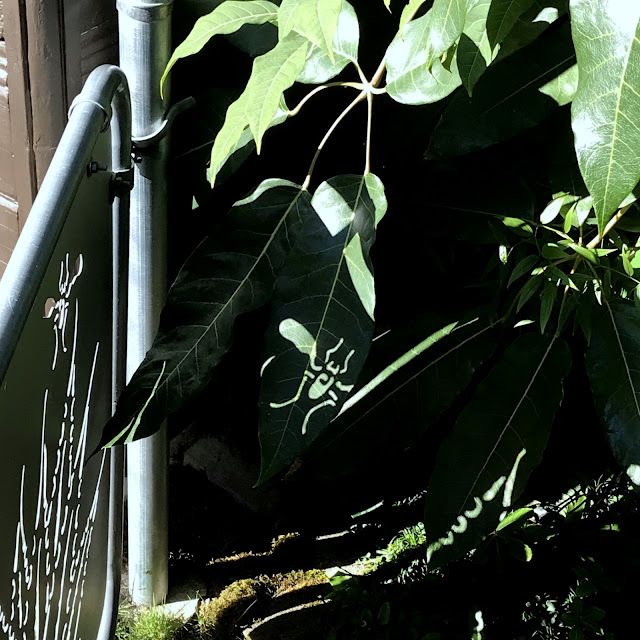
Wednesday Vignette; there's a huge insect on my Schefflera!

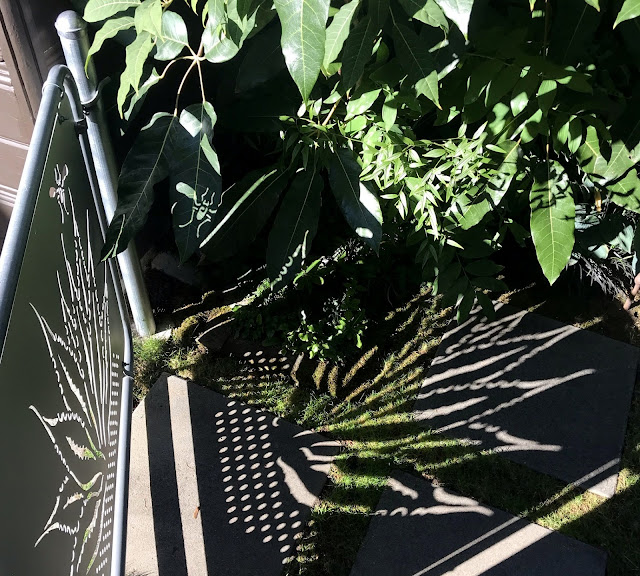
One morning last week I glanced out our bedroom window. I was rather shocked to see a large winged insect on one of the Schefflera delavayi leaves. There was a just a second or two while my brain struggled to catch up with my eyes.

I was there at just the right time to catch the morning sun on the cut-outs of our gate, the shadows creating a pattern on a leaf. A leaf that was in just the right position to have the insect land on it. Pretty cool!

Wednesday Vignettes are hosted by Anna at Flutter & Hum. All material © 2009-2021 by Loree Bohl for danger garden. Unauthorized reproduction prohibited and just plain rude.

Monday, October 4, 2021

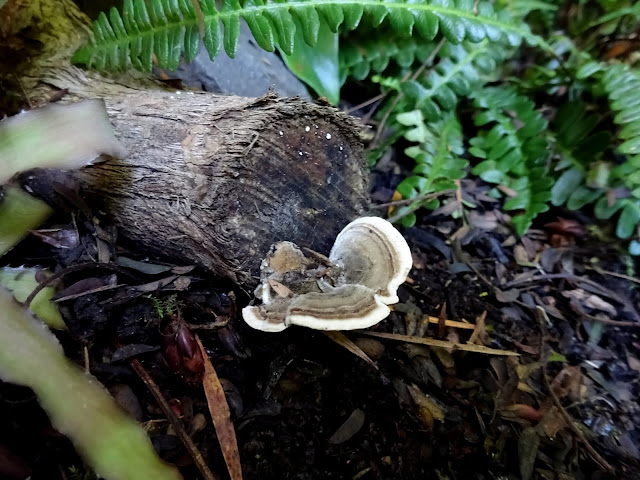
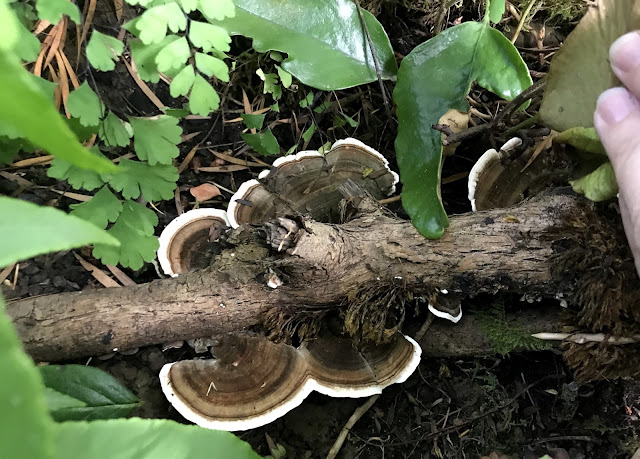
Turkey tails in my garden!

I guess I've spoiled the surprise with the title of this post, haven't I?

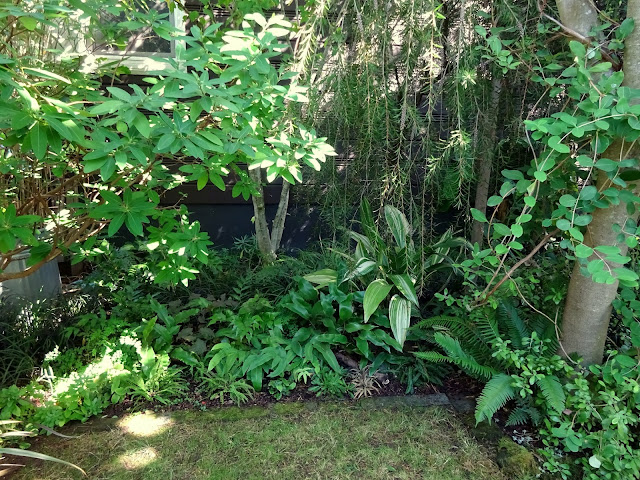
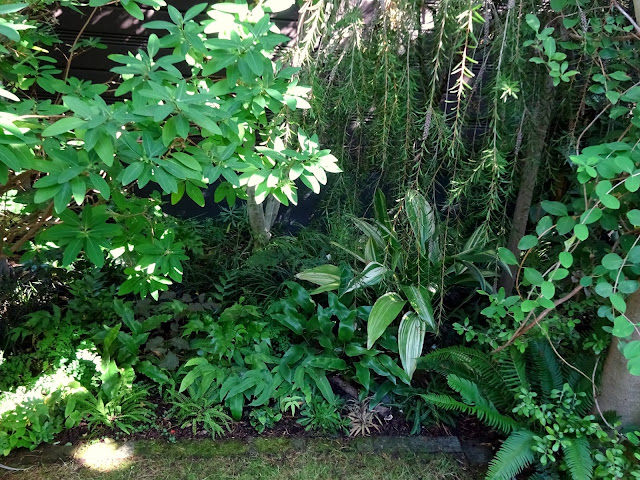
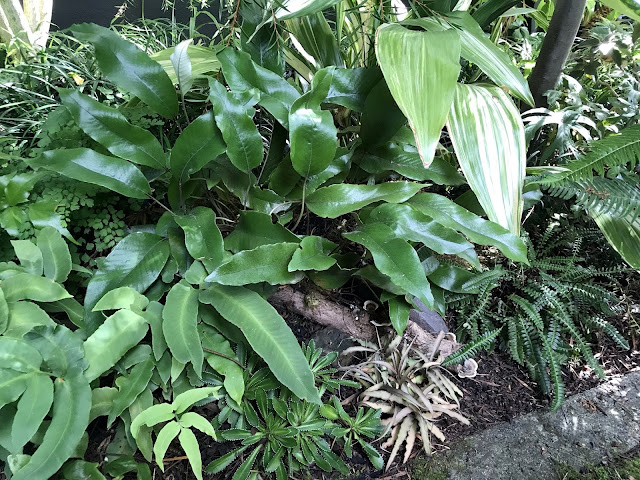
Oh well, since you know where we're headed, I guess I'll take you on a slight detour getting there. This is the area I planted up during our COVID spring of 2020—after removing a little over 20 square feet of lawn. It's filled in nicely, even while having to deal with with a late February freeze—complete with snow and ice, after an extremely mild winter where nothing much was dormant—and come June, three days of the hottest temperatures ever recorded in Portland. 

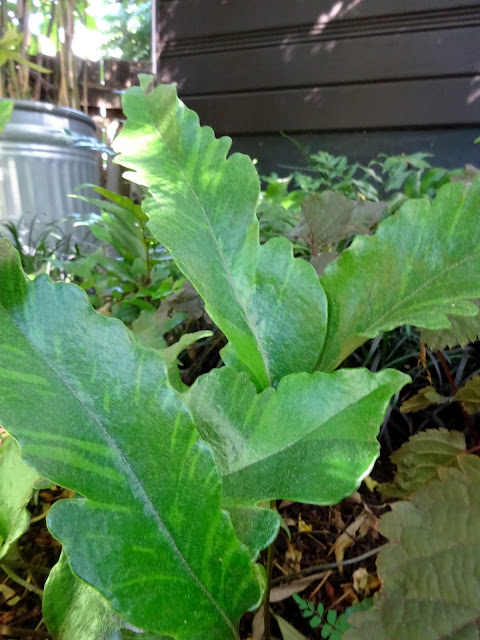
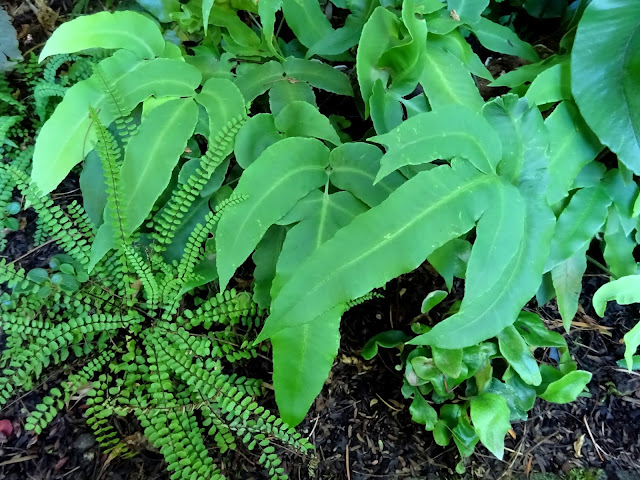
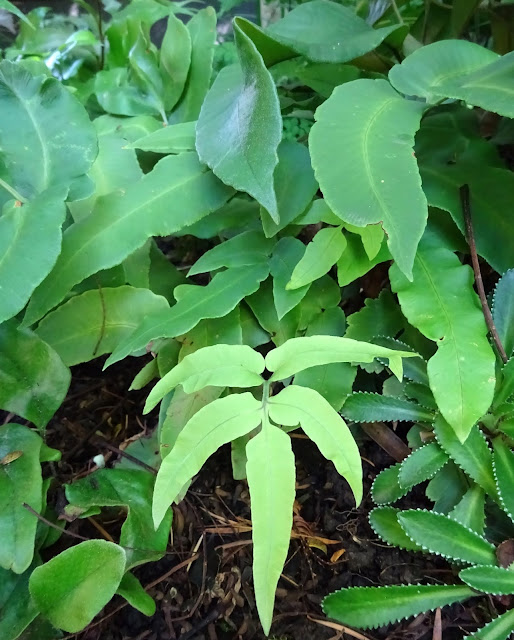
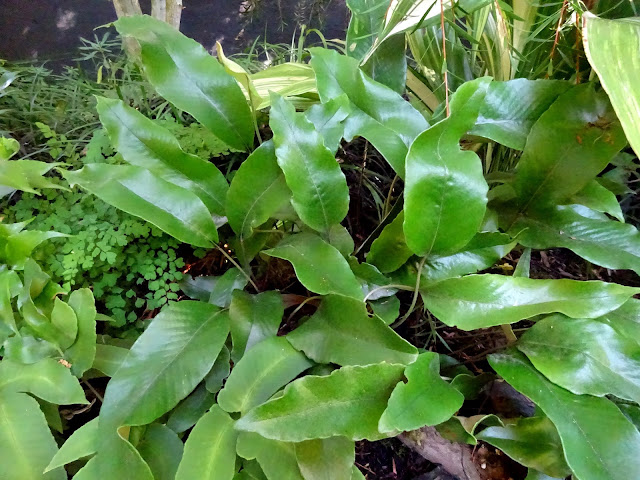
There are pyrrosia, of course.

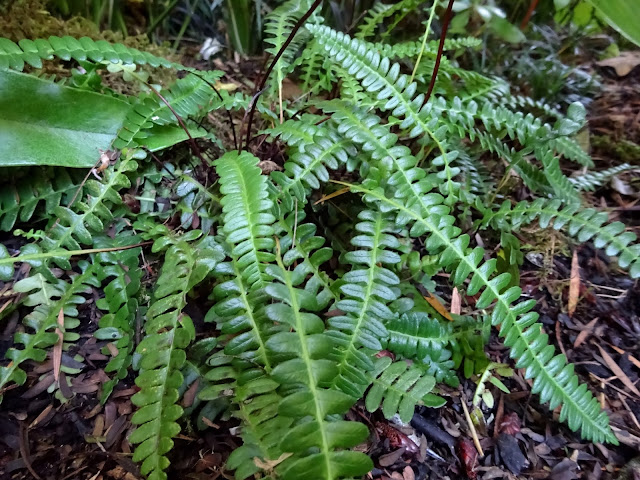
And several Asplenium trichomanes and Dryopteris sieboldii...

Or as I recently read them called, palm fern.

Blechnum penna-marina/ aka Austroblechnum penna-marina makes an appearance.

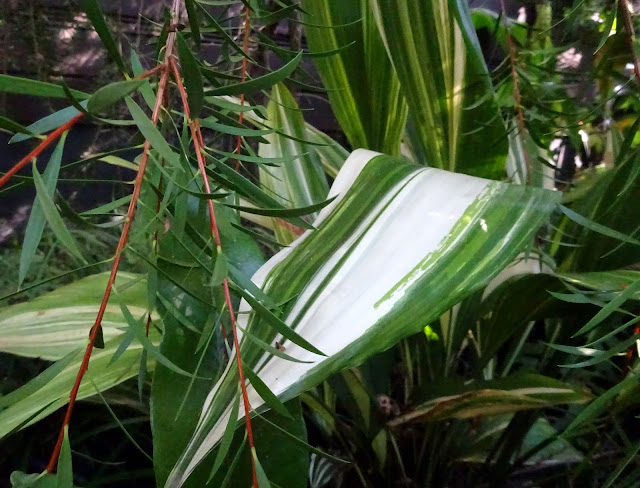
An unlabeled aspidistra with a low-hanging stem of Callistemon 'Woodlander's Hardy Red' adds a bit of drama.

More pyrrosia...

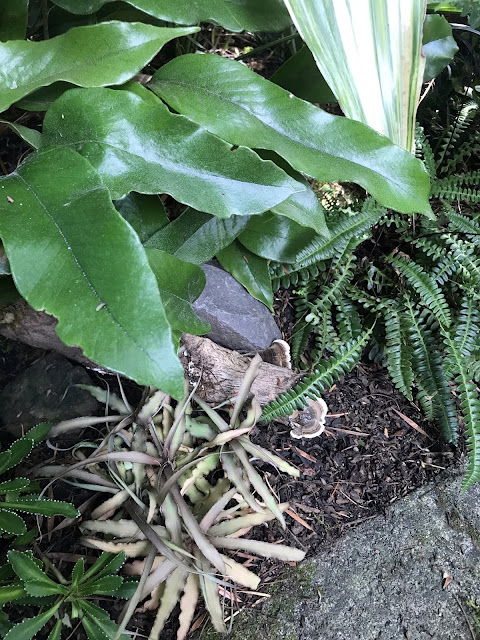
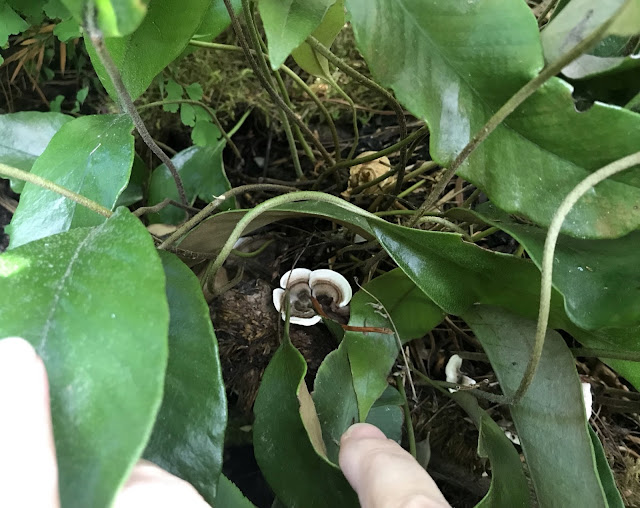
And now we're back to the area we need to look closer at. Do you see it? 

Hint, just to the right of the cryptanthus I planted for no reason other than "why not?" (no, it's not winter hardy).

Interesting how it kind of blends with the odd color of the cryptanthus, don't you think?

As I bent to look more closely at it...

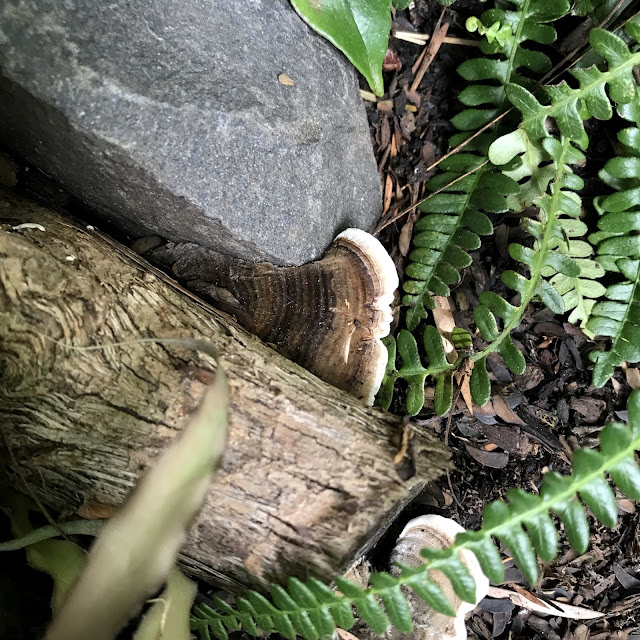
I saw another...

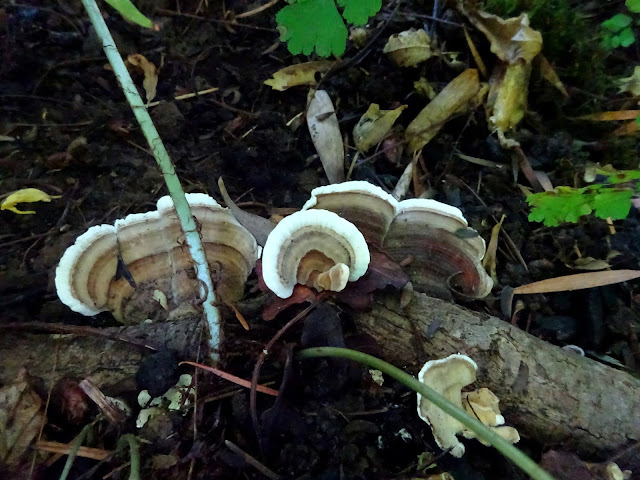
And another...

And more! These are all growing on a mossy branch I brought home from somewhere, I have no memory of where exactly but I know there was no sign of this fungus on it back then. I used the branch to build up the soil around a chunk of pyrrosia, since I  learned they like to grow down a slight incline I figure why not make them happy?

In the process I'veended up with a bunch of fun fungus, I look forward to watching them grow.

All material © 2009-2021 by Loree Bohl for danger garden. Unauthorized reproduction prohibited and just plain rude.

Friday, October 1, 2021

I haven't missed the Ceanothus 'Dark Star' at all...

By the time I act on the decision a plant needs to go I've usually thought it over long enough that I'm confident it's the right choice. When it came to getting rid of the Ceanothus 'Dark Star' last winter, I was a bit concerned I'd miss it come spring, when it really made a garden statement with it's big pink-purple buds. Thankfully I did not, getting rid of it was the right thing to do....
Above is a photo from October 18th of last year, 2020—just before I started to chop off pieces and add them to the yard waste bin. Such a dark and dreary photo! Below is an image of nearly the same space, taken in late August, 2021. The Nolina 'La Siberica' is definitely enjoying the increased light.

Again, Oct of 2020...

Early March, 2011. Even before I started to plant the space looked better without the ceanothus. Sometimes less is more.

And now late August, 2021...

Ha, sorry. I didn't realize I uploaded so many process shots. This one is also from March of this year.

And late August...again...

Things were looking really lush in June (pre heat-dome) when this photo was taken...

Above from left to right: the orange flowers belong to Alstroemeria 'Indian Summer' (in a container), the big leaves belong to Telanthophora grandifolia, an annual in my climate that never really got the water it needed to thrive, but I enjoyed anyway. The bright spikes are Yucca aloifolia 'Variegata' and then you can see some lazy leaves that are Acanthus syriacus, sadly those dried up shortly after our heat dome at the end of June. I think they'll return next year—and hopefully be more successful.

Pointing the camera up, just because. The Paulownia tomentosa didn't miss a beat this summer (photo late August). Its happiness (leafy canopy) is part of why some of the after photos above are darker than others. It takes it awhile to get going in the spring, since we pollard it.

From here on out these are all ground-level close-ups from late August, the Nolina 'La Siberica' has been a consistent star...

With last spring's "super bloom" of several Echium wildpretii in the garden, this is currently the oldest, largest, most gorgeous echium I've got. When it sends up it's bloom-spike next spring (winter-willing) it won't have to battle with the ceanothus for air-space.

This patch of Ajuga reptans 'Black Scallop' looks better than it ever has. The increased light is helping I'm sure.

More of the ajuga along with my oldest Cephalotaxus harringtonia 'prostrata', aka spreading Japanese plum yew.

And here's the little itty bitty new guy I planted out this spring, from Secret Garden Growers.

A close-up of the previously mentioned Yucca aloifolia 'Variegata'

Astelia 'Red Devil'

And Comptonia peregrina, aka sweetfern. This poor plant did not like the 116-degree heat in June. Parts of it got a little crispy.

Persicaria microcephala ‘Red Dragon’—the red always goes green in the heat of the summer—was a random addition to this area a few years ago. It looks great in the spring, but then kinda gets rangy as the summer progresses. It needs a serious chop to keep it managable.

Seeing more of this beauty—Daphniphyllum himalaense ssp. macropodum 'Variegated'—is THE main benefit to getting rid of the ceanothus. Those leaves still make me weak in the knees.

Unfortunately there was one extremely sad plant death in this area during the heat dome/ ankle break. That trio of Cyrtomium falcatum (aka Japanese holly fern), are hiding the carnage and will be planted in this area once the ground is workable again (with the return of the rain, which has already started).

Here's the sad, sad, death. It's the Rhododendron forrestii ssp. forrestii Tumescens that Roger Gossler gave me last spring. So sad! Was it the heat? Did it not get enough water while I was unable to get around the garden? Both? Ugh.

But here's a plant that managed to withstand it all, the heat, the extremely dry conditions. I should be scared. Instead I bought two more. Pachysandra axillaris 'Windcliff Fragrant'. You'll feel free to remind me I should have known better once it takes over this corner of my garden.

The very back edge of the garden, beyond the former ceanothus-land, got a few aspidistra and black mondo plugs this spring while I was planting. In case you're wondering, the plan is to eventually see no bare ground... crampscaping!

All material © 2009-2021 by Loree Bohl for danger garden. Unauthorized reproduction prohibited and just plain rude.