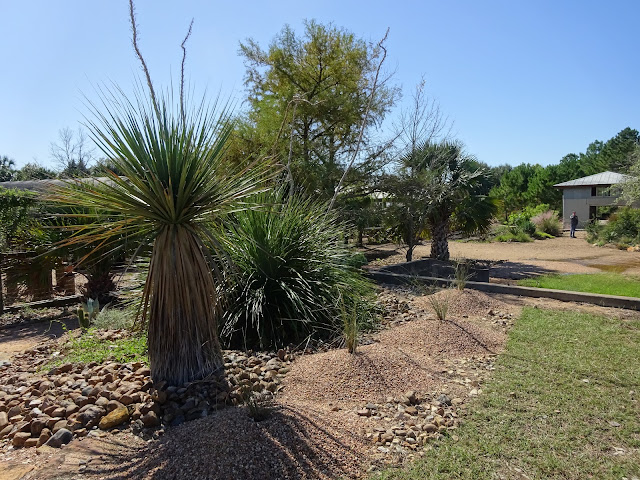
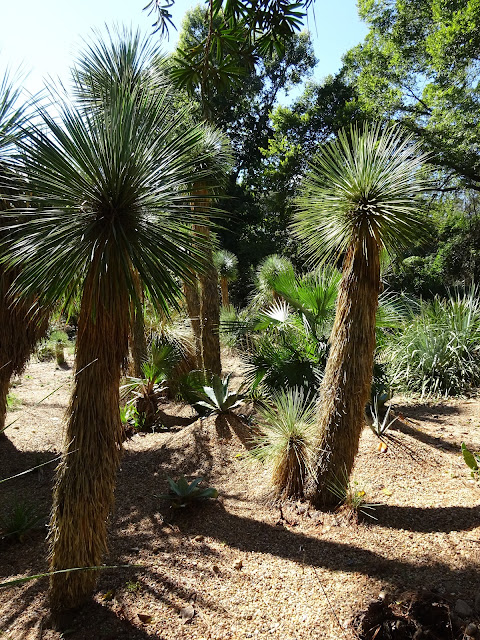
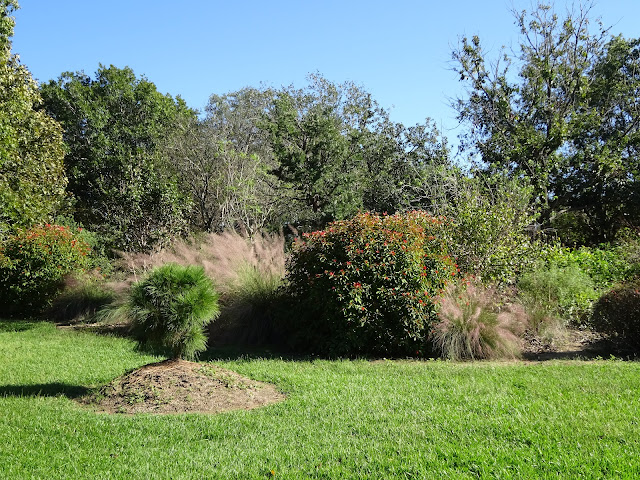
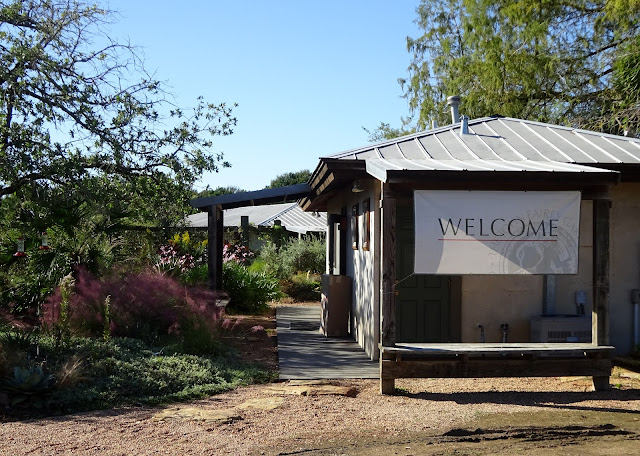
I've teased you with posts about
The John Fairey Garden Mosaic by Dixie Friend Gay,
The nursery at the John Fairey Garden, and
Marcia Donahue's sculptures at the JFG—I think it's finally time I post about the garden itself, don't you?
Pam Penick did all the work to arrange for our visit...
Normally the garden is open for touring only on certain days (
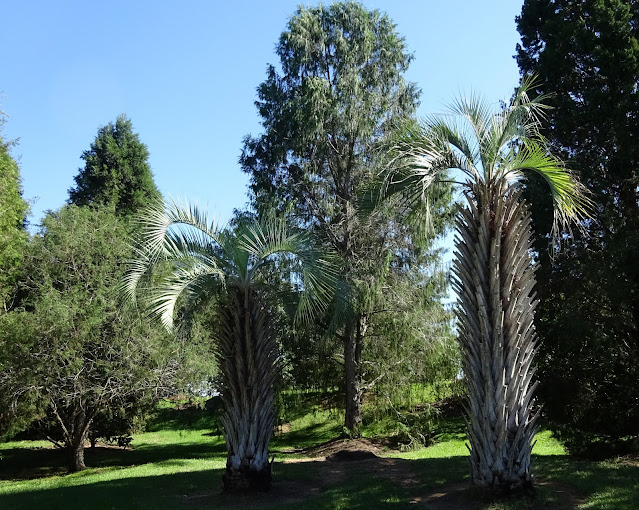
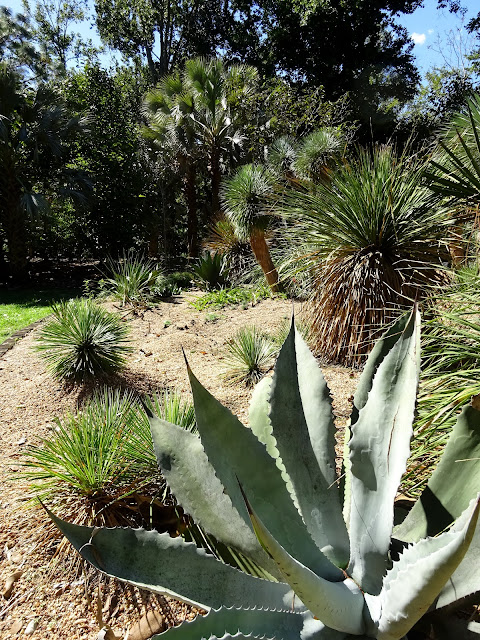
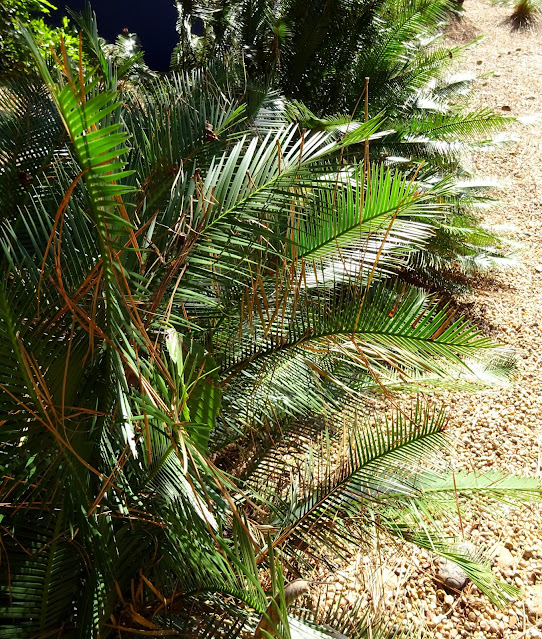
info here) but Pam managed to get us in for a private visit, where we were allowed to roam unsupervised. Since this is my preferred way to visit a garden, I was quite delighted. The only downside is, plants unknown to me went unidentified, such as these striking palms. I have no idea what they are, other than bizarrely beautiful.
We also could have walked right by something of rare and significant status and not even known it. The garden is home to many important plant collections, such as the Oak Collection (
more info here), still—as I mentioned—I was thrilled to be allowed to wander freely.
Upon our arrival we were greeted by Randy Twaddle, executive director, who walked us quickly through the garden, over a precarious footbridge and into the dry garden, before leaving us to our own devices. Despite the fact she'd visited several times before, Pam had never set foot in the dry garden; the bridge being too unstable for public use. I felt fortunate to be allowed into this hallowed ground on my very first try.
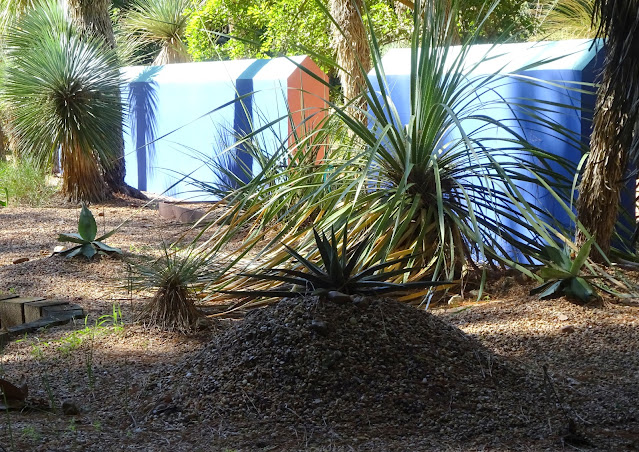
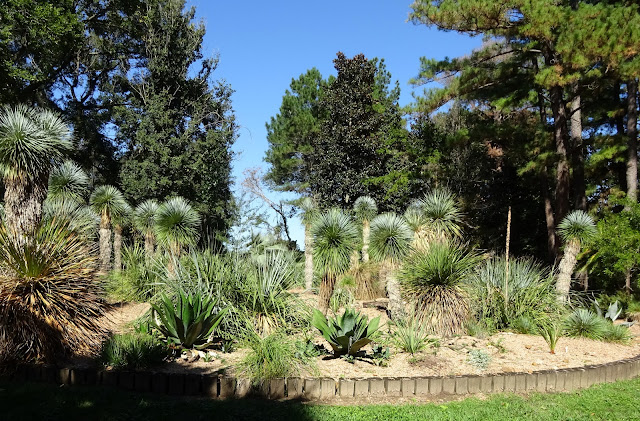
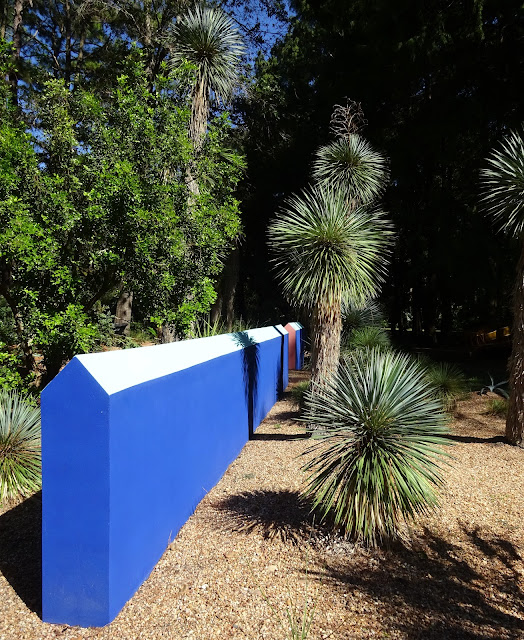
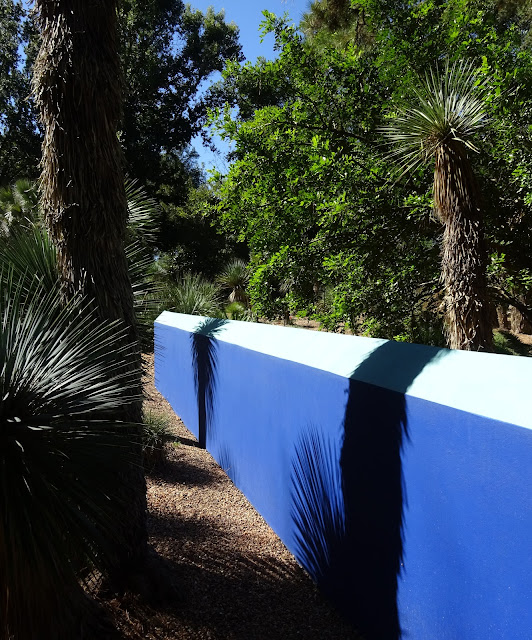
The blue wall, with it's milk carton shape, was a striking backdrop to a few of the garden's many Yucca rostrata.
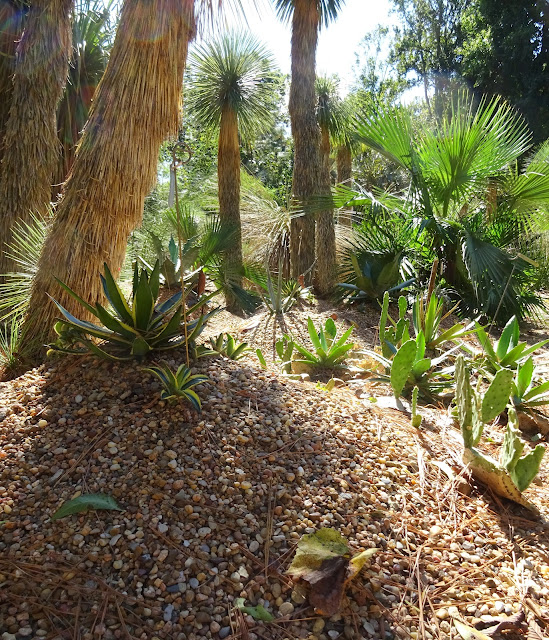
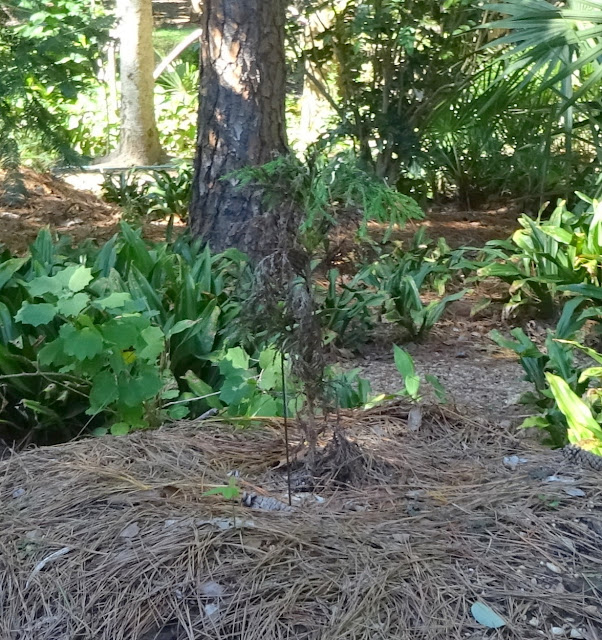
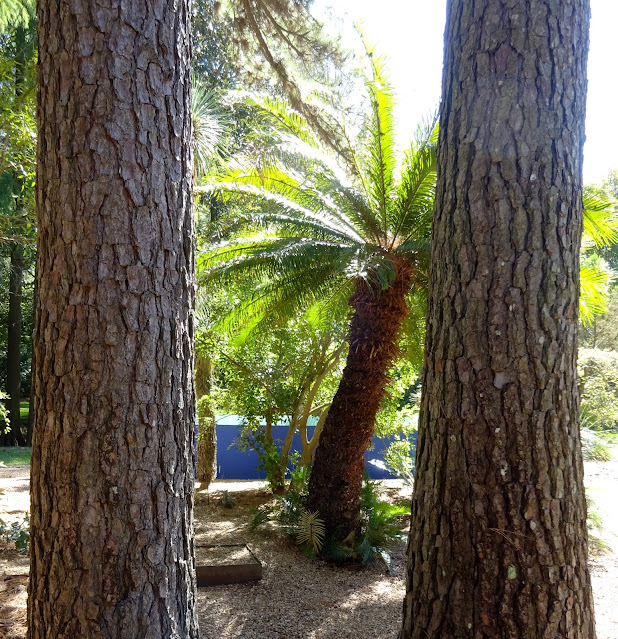
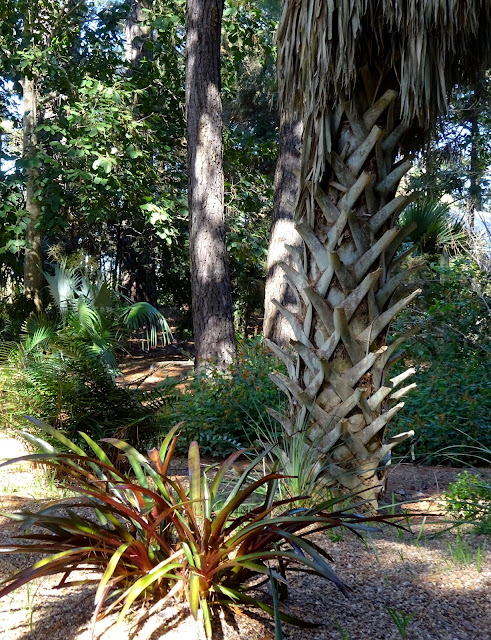
The garden also contained several cycads, like this tall beauty seen between a couple of conifer trunks. As a product of Eastern Washington that was an interesting mash-up. I grew up with tall conifers but in a climate way too cold to grow cycads.
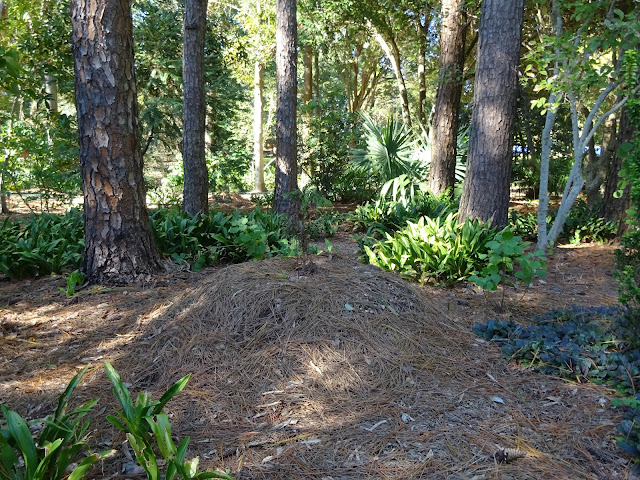
Here's what happens when you plant a cycad under a pine with it's falling needles, a maintenance nightmare I expect.
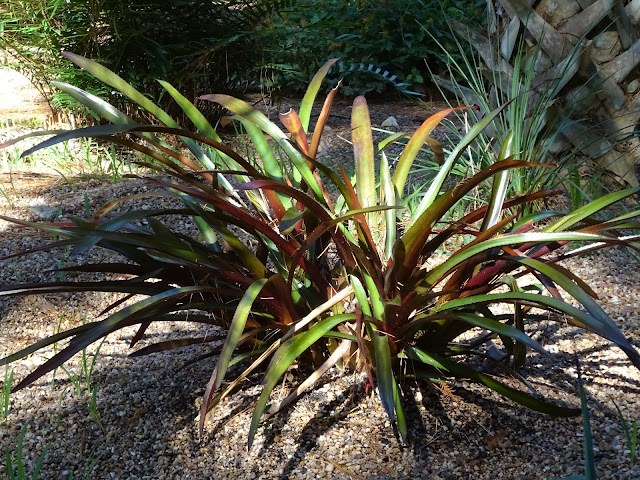
Oh, what's that!?
A bromeliad!? Surely this was planted out recently, since many plants in the garden were still showing signs of the horrid winter extremes experienced back in February of 2021—weather no bromeliad could have survived.
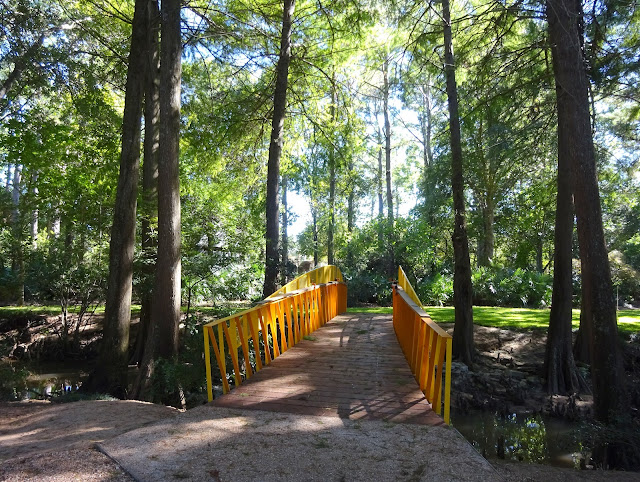
Another "lucky me moment". After crossing over on the rickety old footbridge, Pam and I were allowed to cross back over the recently completed, but not yet christened, fancy new bridge. If you're curious you can read about the design halfway down
this page, or watch a video of floodwater do it's best to take the bridge out just a couple of weeks before I visited,
here.
Once across the bridge we skirted a very wet lawn (there had been a downpour the night before) and headed back to walk the garden around what had been John Fairey's home. Mr. Fairey—the garden's creator and namesake—passed away in March of 2020.
Zamia floridana, aka Zamia integrifolia. It's a cycad that I first mistook for a Cephalotaxus harringtonia 'Prostrata'.
Besides being a plantsman Mr. Fairey was Regents Professor of Architecture at Texas A&M University, teaching there for over 45 years. I enjoyed exploring around the home almost as much the garden and would have loved to see it from the inside.
Interesting how different the new vs. old growth is on this Agave victoriae-reginae.
The extra-wide edge to the pine needle and lily-pad filled pond was a design element that I appreciated.
Along with the orange wall reminiscent of the color we chose to paint our shade pavilion.
The flip-side...
Pam pointed out the plough discs worked into the gate, I'd completely missed them!
My eyes were focused on the forest of tall Yucca rostrata in the distance, but thankfully swept down to the interesting table on my right.
Art? Or a nightmare of a sorting project?
I'm going with art. We all kill plants and have them die on us. This is a great way to sum up that loss.
But back to those yucca...
The slightly elevated pathway was visually appealing, but unfortunately parts of it retained water from the recent rain.
I'd be wrong to skip pointing out the Agave ovatifolia, handsome as it is.
I wonder if anyone has ever counted the Yucca rostrata in this garden?
Backing up so you can see a bit more of the house.
Up next to the house now, and a look at it's generous front porch.
Creatures who met their end in the garden?
This bright blue floral exclamation appealed to both Pam and I so we went closer to check it out.
Flipping those tags over we discovered it was planted out in 1972 and moved to this location in '74 or '75. Naturally this has me wondering about the oldest plant in my garden. Perhaps a blog post will happen someday.
After walking on from the woodland garden, and what appeared to be an arboretum, I came upon another circular planting with Yucca rostrata.
As well as Dasylirion wheeleri, it's marginal "hooks" catching the afternoon sun.
Back near the visitors center we were about to wrap up the garden touring, but not before stopping to notice an unusual crevice garden.
The mangave seems to appreciate the heat of the stone, as well as the increased drainage.
I first thought this cactus was a golf ball!
Agave ocahui (?)
Manmade lake? (it doesn't show up on
Google maps)
I have one more short post with a photos from the garden, that will be up on Wednesday morning. Until then, I hope you enjoyed this look at the John Fairey Garden.
All material © 2009-2022 by Loree Bohl for
danger garden. Unauthorized reproduction prohibited and just plain rude.